
There's a lot of strong dynasty analysis out there, especially when compared to five or ten years ago. But most of it is so dang practical—Player X is undervalued, Player Y's workload is troubling, the market at this position is irrational, and take this specific action to win your league. Dynasty, in Theory is meant as a corrective, offering insights and takeaways into the strategic and structural nature of the game that might not lead to an immediate benefit but which should help us become better players over time.
The One Thing I Always Do Once the Season is Over
The vast majority of dynasty teams are already done for the season. In a few days, only the oddballs with championships during Week 18 or the NFL playoffs will remain. (Yes, the latter is a real thing; I've never participated in one, but the late Chris Wesseling, one of the biggest champions of dynasty fantasy football in its formative years, swore it was the only format he'd ever play.)
With all of my teams making an early exit, I figured now was an opportune time to share the one thing I've always done with all of my teams in the first part of the offseason:
Absolutely nothing.
There Is, In Fact, An Offseason
This is considered heresy in some corners of this space. Many love the idea of a fantasy football league that's bustling 365.2425 days a year (on average). Some of them mean well, but can be a bit tyrannical in imposing that vision on others. I'm here to tell you that it's okay to step away from your league for a while. My oldest dynasty doesn't have its rookie draft until after the penultimate week of preseason; my team typically remains untouched in that league until August.
All of my leaguemates know how to contact me, and I'm always up to chat or play the "what if?" game, but I think one of the keys to success in this hobby is a degree of discipline, a willingness to refrain from making moves just for the sake of making moves. I try to identify areas where I have an edge and confine my activity to those realms. And "tracking short-term fluctuations in player value in February" is not one of those areas.
Without the weekly pressure to set a lineup, I find my leaguemates are much less prone to making shortsighted deals. Without the in-season reality that our optimism on certain players was (in some cases) unwarranted, I find that my leaguemates are less likely to be realistic about their own roster and its strengths and weaknesses.
Beyond noting situations where uncertainty exists (will Travis Kelce retire or return, say), I find myself out of my depth when it comes to handicapping specific outcomes. (What teams will sign which hot free agents, what prospects will shoot up the draft board after a strong combine, and so on.)
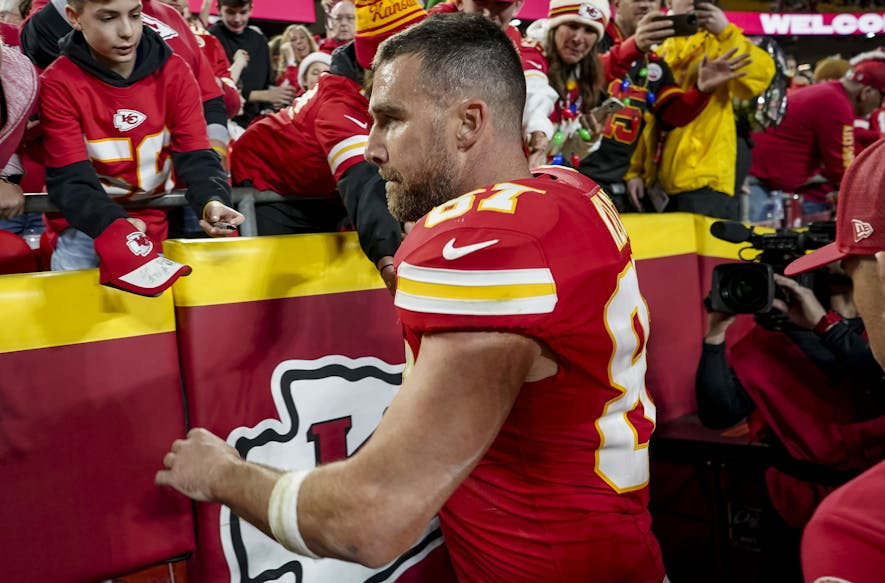
This is not to suggest that there is no profit to be made in February, March, or April. To a first approximation, any deals in dynasty are zero-sum; one team's loss is another team's gain. And there are managers with the specific skillset to excel in this timeframe (my colleague and friend Matt Waldman, for one).
But—perhaps controversially—I would suggest that winners and losers on deals made in February are going to be much more driven by luck than on deals made in October. I feel the space for superior process to provide an edge is much smaller prior to the NFL draft, simply because of the volume of unknown and unknowable information. And the existence of those like Waldman who have devoted their lives to finding edges in this time is all the more reason for me to sit things out.
In chess, there's a concept called Zugzwang where you find yourself in a situation where any move you make will worsen your position. The optimal choice would be to do nothing. Chess does not afford you that option, and much of the analysis of chess endgames therefore revolves around finding ways to place your opponent in Zugzwang.
Zugzwang exists in chess because the rules of the game create an obligation to act. Dynasty, by contrast, creates no such obligation.
You're Not Standing Still, You're Lying in Wait
Continue reading this content with a ELITE subscription.
An ELITE subscription is required to access content for Dynasty leagues. If this league is not a Dynasty league, you can edit your leagues here.