
There's a lot of strong dynasty analysis out there, especially when compared to five or ten years ago. But most of it is so dang practical—Player X is undervalued, Player Y's workload is troubling, the market at this position is irrational, and take this specific action to win your league. Dynasty, in Theory is meant as a corrective, offering insights and takeaways into the strategic and structural nature of the game that might not lead to an immediate benefit but which should help us become better players over time.
An Upsetting Story
Allow me to set a scene: it's Week 16, and your league is holding its fantasy semifinals. You're facing the #1 seed, a juggernaut team with top starters at every position, but it has a problem—its stacked quarterback room featuring Patrick Mahomes II, Jayden Daniels, and Daniel Jones has been eviscerated by injuries in recent weeks. The wire is picked clean, so you use your waiver run to grab every remaining available starter, leaving them with no choice but to take a zero at the position. Then you congratulate yourself on your tactical wisdom and your easy route to the finals.
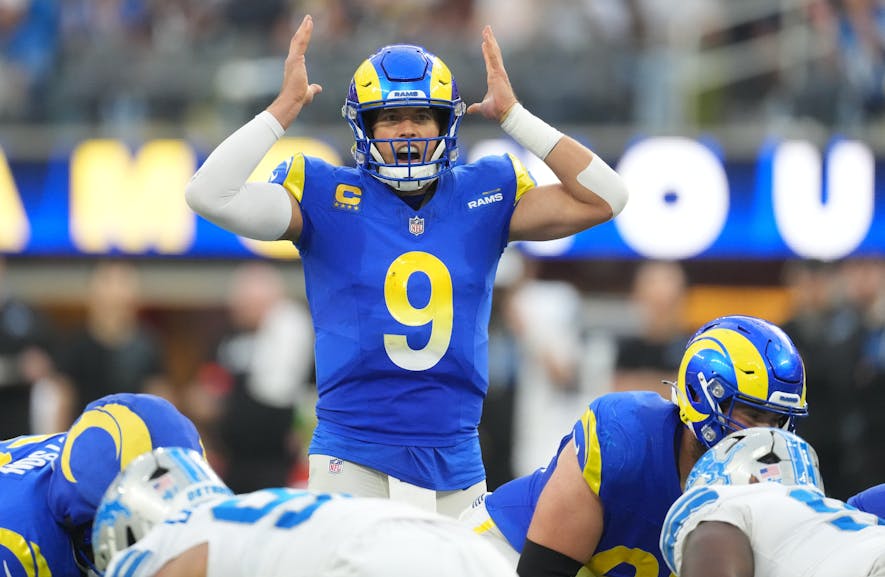
Except your league apparently never set a trade deadline, and your opponent takes advantage of this opportunity to trade Daniel Jones to a newly eliminated team for Matthew Stafford, who goes out and throws for 450 yards and 3 touchdowns on Thursday Night Football, putting you in a deep hole with little hope of climbing back out.
For most readers, the upsetting part of that story is the idea that someone could make short-term trades in the playoffs to bolster their title chances. But in my opinion, the upsetting part of that story was the idea that, if the league had been like most and a deadline had been in place, a team with three starting-caliber quarterbacks could have been forced into taking a zero just because of a poorly timed cluster of injuries.
Trades in the playoffs? I'm not only unbothered by them, I'm firmly in favor.
Why Shouldn't Trades Be Allowed in the Playoffs?
I have asked this question a lot over the years, and it's inspired some... bizarrely passionate responses. People feel very strongly about allowing trades in the playoffs! I truly get that; as I said, I've been writing about deadlines (and hearing those impassioned rejoinders) for well over a decade now.
A lot of the objections are fairly nebulous. Playoff trades "just feel wrong". They bother people. They feel unfair.
A lot of the objections are fairly concrete. Having a deadline mimics the NFL, it protects against abuse from nefarious managers, it rewards planning, and so what if it's occasionally unfair? Fantasy football is nothing if not unfair.
I draw a distinction between nebulous objections and concrete ones, not because one class is more valid than the other. Indeed, the distinction is often meaningless; many "nebulous" objections are just the subconscious articulating the existence of a concrete objection we haven't fully considered, and likewise, many concrete objections are things that aren't really important to us, but which serve as a convenient justification for an unexplored gut feeling.
Instead, I draw the distinction to this end: if your objection to trades in the playoffs is that they just "feel wrong", I can't really argue with that. If you don't like them, you definitely shouldn't allow them; you should design your fantasy football leagues to best serve your desires!
But I do want to talk about a few of the more common concrete objections. And perhaps reading a rejoinder might even soften that gut reaction and open you a little bit to the possibility.
Claim: Barring Trades Rewards Prepared Teams
Hopefully, the Patrick Mahomes II / Daniel Jones / Jayden Daniels hypothetical is enough to rebut this; if your league has a Week 10 trade deadline, say, it's hard to imagine how much more prepared a team could be than carrying a pair of Top 5 (at the time) quarterbacks and a young star on his way back from injury. This isn't a very implausible scenario, either; I suspect there are several teams out there with those three quarterbacks.
Yes, the deeper a team is, the more injuries it can survive, but injuries are random, and random things cluster. You could have two extra players at each position and be just fine after three injuries at three different positions, but totally cooked if those injuries all occur at the same position.
And if you think shallow teams are rewarded by allowing trades late in the season, I have to ask... what exactly are those shallow teams trading? Deeper teams always fare better on the trade market simply because they have more assets that other managers want.
(I mostly focus on injuries because I think it's the most sympathetic case. We can recognize that a team that loses multiple star quarterbacks in a very short time just got hosed, and we can sympathize. But to be clear, I think trading should be allowed even absent an injury. If a manager just wants to improve his or her team in Week 16, I think they should be encouraged. Managers trying to improve their teams is Good, Actually.)
Claim: Barring Trades Protects Against Abuse
Say an unscrupulous manager is planning on leaving after the season, so they sell all of their young cornerstone assets to load up for one last run. This is very bad because it leaves the league scrambling to find a replacement manager who is tasked with taking over a hobbled franchise. Adding a trade deadline helps protect against this.
But playoff trades aren't the only (or even the most common) way this risk expresses itself, and trade deadlines aren't the best (or even the most direct) protection against this risk. Even with a trade deadline in place, a team could sell all of their future picks in November to load up for a run. Often, leagues guard against this by not allowing future picks to be traded unless future league dues are paid in advance; it's certainly easier to attract a replacement manager willing to stomach a rebuild when they have a few free years to get started.
In lieu of a hard deadline, leagues could adopt a soft deadline for the same benefit: trades after a certain date are allowed but require prepaying next year's dues.
Claim: Trade Deadlines Mimic the NFL
Continue reading this content with a ELITE subscription.
An ELITE subscription is required to access content for Dynasty leagues. If this league is not a Dynasty league, you can edit your leagues here.