RELATED: See Undervalued Assets here.
Fear not ahead of draft day, Intrepid Reader. For this analyst has cracked the Da Vinci Code of fantasy football. He has solved the Riemann Hypothesis. I know what happened at Dylatov Pass. Have deciphered the Voynich Manuscript. I can keep cereal crispy in milk indefinitely.
Sigh. If only.
Are you ready? Are you prepared to have the mysteries of the universe revealed to you?
In fantasy football, it's good to draft players who outperform their price tags—and bad to draft players who fail to meet theirs.
I know. It's groundbreaking stuff. Seismic even. You may want to sit down.
Joking aside, the fact that value rules fantasy football isn't exactly solving the Raven paradox—it's fairly common knowledge. And yet each and every year, there are drafters who pass on players in positions of value. And those who draft others far earlier than it turns out than they should have.
And in many respects, the latter is so much worse.
There are few things worse in fantasy than drafting a player, looking at their production a month into the season and telling yourself, "He's just a slow starter." Then looking at said player at the halfway point and saying, "Well, he'll pick it up in the second half of the season." By Week 12, it's just hurling obscenities at the laptop. When the season ends, it's the laptop that gets hurled.
Not. Fun.
Every year, there are potential draft-day landmines that fantasy managers must avoid.
And they exist in every round.
The Most Overvalued Player in Each Round
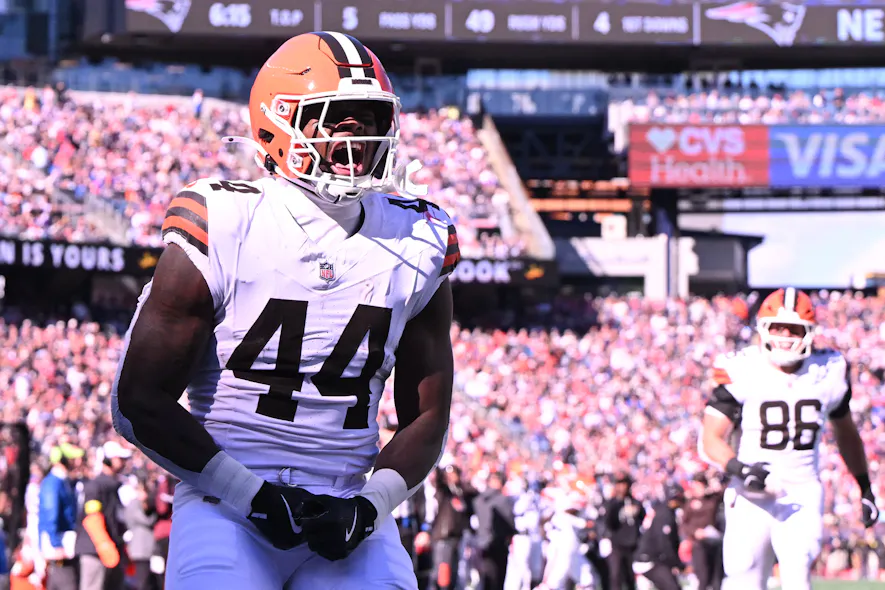
Round 1: RB Christian McCaffrey, San Francisco (ADP: 6)
What, you thought I could possibly leave this poor deceased equine be? Nope—it's getting hammered until people get it through their heads that McCaffrey is the single biggest fantasy bust of 2026.
It doesn't matter how talented he is. There is just far too much historical precedent working against him for McCaffrey to return value this year. There is "The Curse of 370." The history of running backs who have surpassed 2,000 total yards in a season. The history of 30-year-old running backs in the modern NFL.
The first two times McCaffrey had a 2K season in total yards, he missed 13 games the following year—including after the only other 400-touch season of his career before 2025.
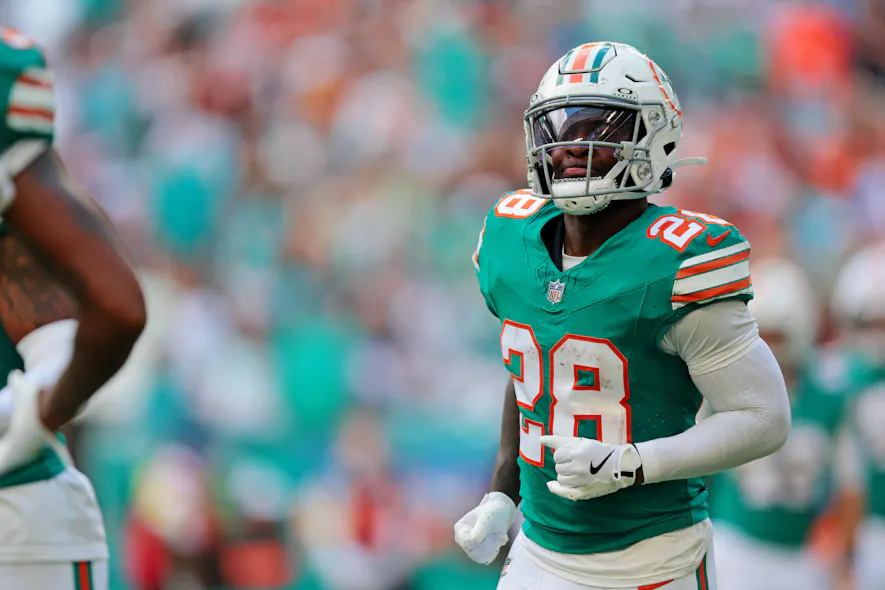
Round 2: RB De'Von Achane, Miami (ADP: 13)
Just as with McCaffrey, the problem with Achane isn't his talent—the fourth-year pro topped 1,800 total yards, scored a dozen touchdowns and was fifth in PPR points at running back in 2025.
The issue is that the Dolphins have a legitimate shot at having the NFL's worst record in 2026. The best wide receiver on the team may well be Malik Washington. Hello stacked fronts. And negative game scripts.
Add in missed time in two of three seasons and offseason shoulder surgery, and you have a situation where there are a lot of things that could potentially go wrong—too many to draft Achane ahead of the likes of Omarion Hampton of the Chargers or Saquon Barkley of the Eagles.
Round 3: QB Josh Allen, Buffalo (ADP: 27)
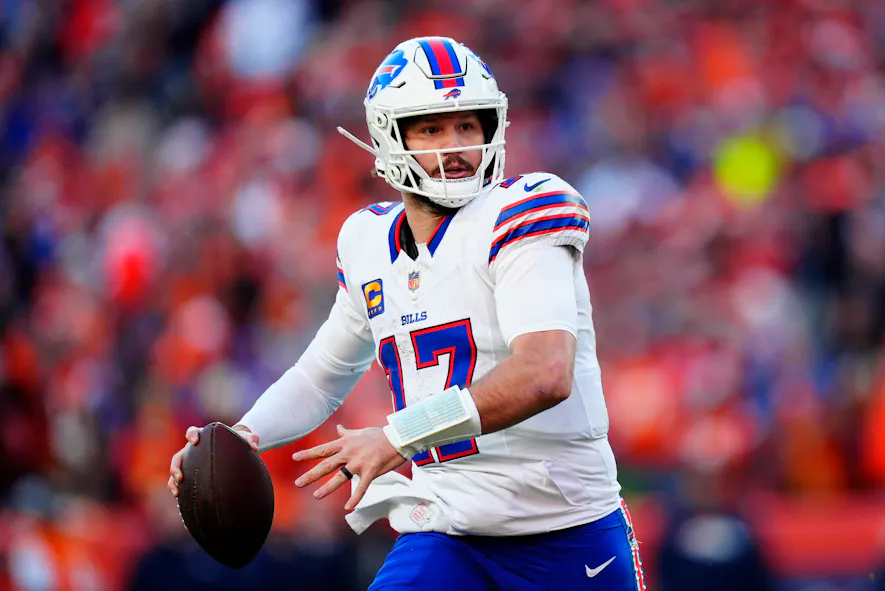
Could definitely have put Arizona running back Jeremiyah Love here, but didn't want this to appear to be an attack on the position. They're big and like hitting people. Besides, while taking Love with the first pick of Round 3 may be a bad idea, taking a quarterback (any quarterback) two selections later is even worse.
Sure, Allen's great. He was the highest-scoring signal-caller in fantasy a year ago. He's a 99 in Madden '27. Married an Oscar-nominated actress.
But Allen also only outscored the No. 10 fantasy quarterback in 2025 by all of 3.3 points per game. He outscored Matthew Stafford of the Rams last year by under six points for the season. Stafford was taken in Round 14 on average.
There's no value in taking a quarterback early. Period.
Round 4: WR Malik Nabers, NY Giants (ADP: 38)
Recency bias is absolutely a thing in fantasy drafts. But apparently primacy bias is as well—because apparently a lot of managers appear willing to ignore the present with Nabers in favor of the past.
Yes, Nabers was outstanding as a rookie two years ago—109 receptions, 1,204 receiving yards and seven touchdowns on the way to a sixth-place finish in PPR points. But last year Nabers made it just four games and 18 catches into the 2025 campaign before his season was ended by a torn ACL.
Yes, Nabers dodged the PUP list to begin training camp, but that in no way guarantees that he will be ready for Week 1—or that he will be anywhere close to 100 percent until well into the 2026 season.
Round 5: RB Bucky Irving, Tampa Bay (ADP: 53)
Oh look, more primacy bias!
How many times can I use that before it doesn't make me sound smarter anymore?
I know. It never did.
Yes, Irving was phenomenal as a rookie—a surprise star who topped 1,100 yards on just 207 carries, caught 47 passes, scored eight touchdowns and was a top-15 fantasy option. But the bottom fell out last year—seven missed games, a paltry 3.4 yards per carry and half as many scores.
Yes, Irving is healthy again. But the Buccaneers signed Kenny Gainwell to help keep him that way. It's not unreasonable to expect close to an even split in touches between the two. And Sean Tucker is there to poach touchdowns from both.
Gainwell will lead the Tampa running backs in PPR points. Put that in your Voynich Manuscript.
Round 6: QB Jayden Daniels, Washington (ADP: 66)
It feels like there's a theme developing here.
Jayden Daniels had a fantastic rookie season—the 25-year-old surpassed 3,500 passing yards with 25 scores, added another 891 yards (second among all quarterbacks) on the ground and six scores on the ground, won Offensive Rookie of the Year honors and was fifth among quarterbacks in fantasy points.
That's exactly the spot where he's being drafted this year—at his ceiling. Ignoring the 10 missed games in 2025. Ignoring the per-game regression across the board in 2025. Ignoring a supporting cast that exactly zero defenses will be afraid of.
Drafting Daniels at cost is like swimming with crocodiles wearing only bacon underwear. Sure, it's possible you'll make it out alive. But the odds aren't great.