
If running backs are the cryptocurrency of dynasty markets, wide receivers are the index funds. Their value is insulated. They appreciate slowly over time. They're easier to assess than other speculative areas of the market. While last week's running back article started out with just a small handful of guys that would work in any dynasty roster, the list of wide receivers offering similar utility is much longer.
Receivers are drafted higher in the NFL, often providing them with immediate roles and more chances. Their careers are longer than those of running backs. While backs are often products of their environment, talented receivers can dictate the effectiveness of their system on their own accord. And where a back's prime can often last just a year or two, it's not uncommon for a top-tier receiver to stretch out high-end production over a full decade.
As always, this isn't a flat list of rankings. Dynasty value is too layered for that. Some teams should be targeting guys who can give them instant production. Others should be stashing young, unknown players with the hopes of striking gold. In this article, I'll break players into buckets of other receivers with similar profiles: production, age, trajectory, value, injury history, and more. This is a new way to imagine dynasty values. Don't use this article as your guiding light in a dynasty startup. We have dynasty rankings for that. Read this to get your wheels spinning about players to target in trades.
Last night, Jeff Bell and I went through this article with a fine-toothed comb, talking about every tier, who I value correctly and incorrectly, who can still grow, and who might be on borrowed time. Check out the full podcast for an even deeper discussion of an already nuanced topic.
Let's dive in, starting with the guys who have a perfect blend of age, production, and situation.
Dynasty Wide Receiver Rankings and Tiers
The Elites
These are your cornerstones. They were all in the top five in scoring last year. They're all on the right side of the age curve. They all have good quarterbacks. Chase's placement at the bottom of this list might raise some eyebrows, but he's coming off a slightly down season where Joe Burrow dealt with injuries, proving that he is, in fact, mortal. Nacua was the per-game WR1 even with Davante Adams siphoning goal-line looks. He's been wildly productive when healthy, averaging 20.0 PPR points per game since entering the league, best among all receivers. And Smith-Njigba, after a couple of years in the shadows of DK Metcalf and Tyler Lockett, fully broke out in 2025 under Klint Kubiak. While his efficiency is likely to regress a bit in 2026, he's the youngest of the bunch with the most room to theoretically continue growing. Whether rebuilding or contending, these players will fit on any roster. They shouldn't fall past the midway point of Round 1 in startups. Any trade discussions involving them should involve a return with multiple first-round picks or young, ascending players. No one is ever truly off-limits in dynasty trades, but these guys are close.
The Almost-Elites
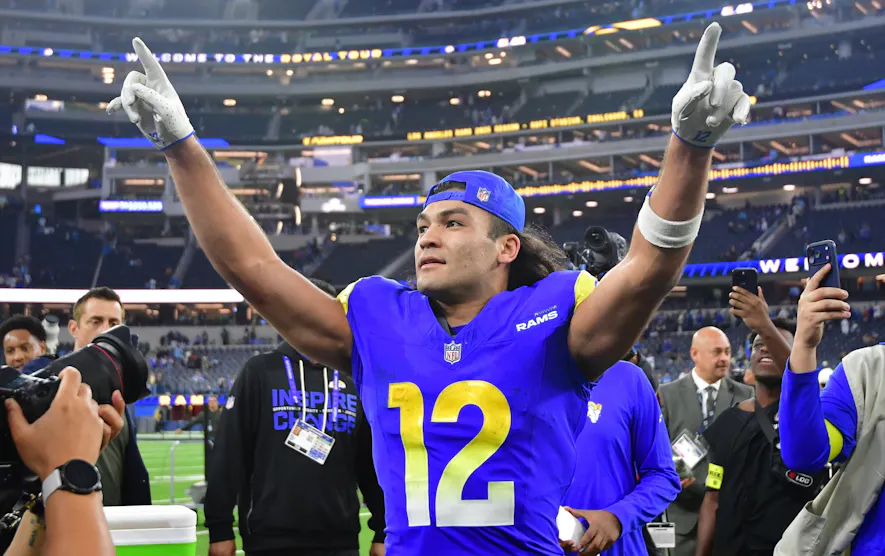
While these guys haven't had the production required to put them in The Elites tier, they are right on the precipice. Nabers is coming off an ACL tear, but his pre-injury production nearly had him there. He'll have to answer questions about his recovery, but could be as his as WR1 by the season's midway point if everything goes well. London is the old man of this group, about to enter his age-25 season. He dealt with some injuries last year but has proven to be one of the league's best target earners. With a clean bill of health going into 2026 and improved quarterback play, he could ascend the ranks as well. And while McMillan's overall production wasn't mind-blowing (WR15 in 2025), he showed an ability to draw targets and be an offensive focal point. He proved capable of producing in the NFL, and just marginal growth could help him ascend in Year 2. All of these players were drafted early in Round 1, giving them long-term insulation in dynasty. Nabers is a perfect example, tearing his ACL early in his second year and still maintaining a spot high in the rankings. These players, like the group above, can fit into any roster construction. They can provide elite production for contenders and inject value into rebuilding rosters.
Elite 27-Year-Old Producers
There might be a few mini-tiers within this tier, but they're probably closer in value than a lot of dynasty managers realize. All will play in 2026 at age 27. All have proven capable of solid production. Long seen as a top-three wide receiver, Jefferson dealt with quarterback problems in 2025, and Lamb has ankle injuries. Both are coming off the worst seasons of their careers. Meanwhile, St. Brown is coming off his second-best. Smith is heading into 2026 atop the Eagles' depth chart. Collins offensive environment should be improved. Higgins should have a healthy Joe Burrow. Jefferson and Lamb are clearly the most valuable here, as both have seasons as fantasy's top-scoring receiver on their resume. While leaguemates are paying up for them, savvy managers might be able to find similar production and age at a slightly lower price.
Strong Metrics, Shaky Production
All of these guys are recent Round 1 picks who have proven the ability to draw targets and operate as their teams' top receiver. In dynasty, it's imperative to look at the underlying metrics rather than raw output. All three of these receivers ranked in the top ten in target share last year. Wilson led the bunch (33.7%, second-best behind Smith-Njigba) and is still 26 years old. Just a straight uptick in quarterback efficiency could push him to a top-three finish. Olave is coming off a huge breakout season, and the hope is that Jordyn Tyson's arrival will help Tyler Shough build off a promising rookie campaign. Flowers also had a stellar season, setting career highs in targets, receptions, yards, and touchdowns. He's been notoriously unlucky scoring touchdowns throughout his NFL career, and positive regression in that column is the only thing holding him back from a WR1 finish. There's a theme with the top wide receiver in the league. Most are first-round picks, and all are elite target earners. Everyone in this group checks those boxes.
25-Year-Old Game-Breakers
Both Pickens and Williams were fantasy WR1s last year despite being the second options on their teams. They offset their secondary roles with elite efficiency, as we've seen historically from guys like Tee Higgins and DeSean Jackson. Pickens had a huge breakout in 2025, posting career highs across the board. A long-term deal with Dallas would calm concerns about his multi-year outlook, as the late-season lack of effort reminded us of his disappointing years in Pittsburgh. Williams, a former top-ten pick, also had a rough start to his career, recovering from an ACL tear as a rookie and getting suspended for gambling in Year 2. But in Year 3, he posted career highs across the board despite an 18.4% target share (44th among receivers). Both of these receivers have game-breaking speed and hit their high-end range of outcomes due to elite efficiency in good offenses. While that makes them slightly risky to acquire, they are young and ascending players who score fantasy points. Another season with similar production could cause them to skyrocket up the rankings. Inversely, a down season could cause their detractors to punish them in rankings even more than they already have. Some analysts might tell you to fade these players in dynasty. You won't hear that from me.
Top-Ten Rookies
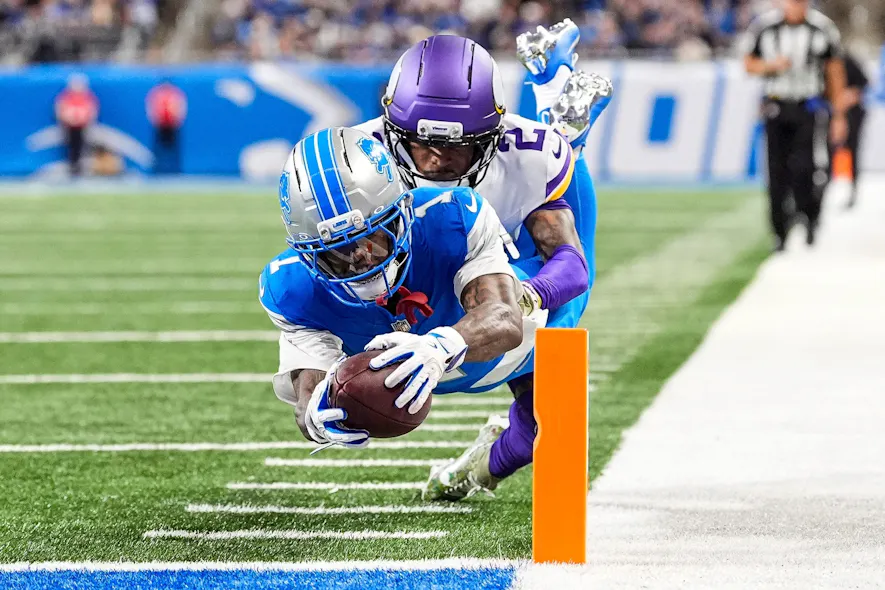
The list of wide receivers drafted in the top ten over the last five years is pretty good: Tetairoa McMillan, Marvin Harrison Jr., Malik Nabers, Rome Odunze, Drake London, Garrett Wilson, Ja'Marr Chase, Jaylen Waddle, and DeVonta Smith. If we're looking at the floor of Harrison and a ceiling of Chase for Tyson and Tate, count me in. Sure, there are busts. And both Tyson and Tate could be next up on a list of embarrassing draft picks. But the investment teams made in them should provide early roles and playing time. As Sigmund Bloom eloquently put it on a show recently, "Late-round picks have to prove they're good. First-round picks have to prove they're bad." Tyson will have a tough early career playing opposite Chris Olave. But as we've seen, a good wide receiver can often elevate an entire offense, giving both Saints' receivers a chance to be productive. Tate should operate as the Titans' WR1 while they try to develop Cam Ward. His situation feels awfully similar to McMillan's last year, who was brought in to help Bryce Young. These rookies have clearly separated themselves from the rest, and hope to do so even more once stepping on the field this season.
Rashee Rice
Rice's 17.9 PPR points per game since the start of 2024 are the fifth-most of any receiver. He was a Round 2 pick. He just turned 26. There's a lot to like about Rice. Unfortunately, what he does off the field blurs the picture. Rice has been in hot water more than once throughout his NFL career. He took a small suspension last year before dodging another legal issue this offseason. Another layer of his projection is Patrick Mahomes II, who is working to return from an ACL tear. Rice has a relatively limited route tree, but his function in the offense as an extension of the run game makes him extremely valuable. He runs a lot of screens and slants, gobbling up short targets and creating after the catch. The Chiefs also get creative near the goal line, drawing up pop passes and inside runs to Rice. It's really hard to imagine how Rice will look a few years down the road, but his immediate production in this Chiefs' offense makes him an alluring target in dynasty, although mostly reserved for contenders.